Most Overpowered Anime Characters


Some anime heroes and villains are so strong that the rules of their worlds bend around them. These characters break limits, rewrite power systems, and turn impossible situations into routine wins. They come from very different genres, but each one brings a set of abilities that sits far above everyone else on the screen.
This list looks at what they can actually do in their stories, how their powers work, and when those powers change the stakes for everyone around them. You will also see who brought these worlds to life, since studios and producers often build the visual language that makes these abilities feel as overwhelming as they are.
Saitama from ‘One-Punch Man’

Saitama ends nearly every fight with a single punch, and the story uses this setup to show how his power dwarfs the rest of the cast. He trains with a simple routine and reaches a level where dragon level threats and alien warlords fall instantly, which turns most battles into showcases of collateral damage and comedic timing. The series frames his strength through other heroes in the Hero Association who need teams and strategies while he solves the same problems in seconds.
The anime’s first season came from Madhouse, which delivered clean impact frames and wide shots that highlight how casually he moves through disasters. Later episodes from J. C. Staff keep the focus on his effortless speed and timing, and the adaptation shows his serious strikes as a rare escalation that makes the floor drop out beneath the opponent.
Son Goku from ‘Dragon Ball Super’

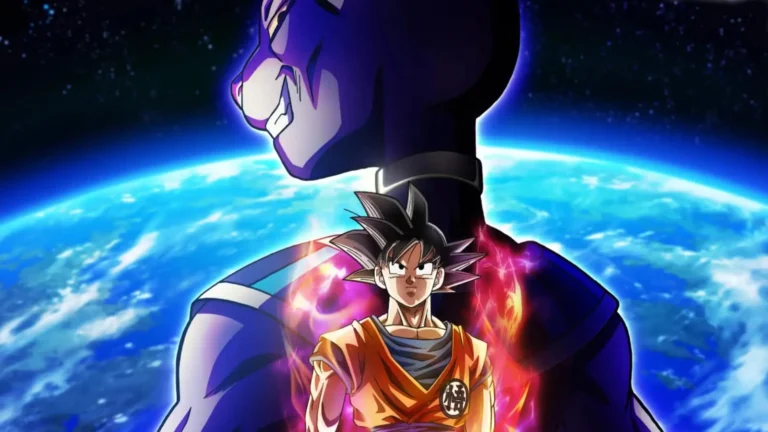
Goku climbs to divine power through Super Saiyan God and Super Saiyan Blue, then reaches Ultra Instinct, a state where his body reacts without conscious thought. Tournament arcs use these forms to show clear jumps in speed, precision, and ki control, and the series places him against gods of destruction and fused warriors to set a new ceiling for martial arts in the franchise.
Toei Animation presents these transformations with distinct auras and choreography that make each level easy to read. The production’s staging in the Tournament of Power emphasizes ring outs, beam clashes, and counter timing that explain why Ultra Instinct is less about brute force and more about perfect movement.
Zeno from ‘Dragon Ball Super’

Zeno, the Omni King, erases entire universes with a gesture, which sets a hard limit on what any fighter or god can oppose. The plot uses his decisions to trigger multiverse events and to define the stakes of tournaments, and characters who can destroy planets treat his presence with immediate caution because his power skips the usual escalation.
Toei Animation depicts his authority with simple design and matter of fact delivery, and the production frames his erasures as quick cuts that remove worlds without resistance. This approach matches the script’s intent, since rules and power levels stop mattering the moment he acts.
Satoru Gojo from ‘Jujutsu Kaisen’

Gojo combines the Limitless technique with Six Eyes to control space at atomic precision. Infinity slows incoming attacks to zero, Blue pulls targets in, Red repels with destructive force, and Purple fuses the two into erasure. These mechanics show up in lessons he teaches and in city block set pieces that make his domain expansion a battlefield he completely owns.
MAPPA presents his techniques with clear visual language, using distortion and layered patterns to communicate distance and pressure. The studio also frames his blindfold and gaze reveals as switches that tell the audience exactly when a fight moves from difficult to impossible for his opponent.
Eren Yeager from ‘Attack on Titan’

Eren gains access to the Founding Titan and uses the Paths to command other titans. This link to the origin of titans allows large scale transformations and coordination, and the Rumbling shows how that power turns the entire world into a map of inevitable destruction. The story details how bloodlines and contact conditions gate this ability until he finds a way to control it fully.
Wit Studio built the early visual grammar for titan abilities, and MAPPA later expanded the scale with longer sequences of moving formations and wide aerial tracking. Both studios make the Paths feel physical and abstract at the same time, which helps the audience understand why this power sits outside regular titan combat.
Kaguya Otsutsuki from ‘Naruto Shippuden’

Kaguya stands at the source of chakra on Earth and uses techniques that rewrite the landscape in an instant. She shifts dimensions, controls gravity wells, and deploys an expanding truth seeking sphere that threatens to erase everything, which underscores how far above the ninja power curve she sits. The narrative explains her connection to the God Tree and the chakra fruit to ground her abilities in the series’ mythology.
Studio Pierrot presents her battles with abrupt scene changes and perspective shifts to sell dimension travel and distance tricks. The production’s use of negative space around her orbs and portals keeps the focus on effects that ignore conventional defense and movement.
Ichigo Kurosaki from ‘Bleach: Thousand-Year Blood War’

Ichigo’s power draws from Shinigami, Hollow, and Quincy origins, and the arc reveals how those threads reshape his Zanpakuto. He gains a true Shikai and a refined Bankai that reflect this hybrid nature, and the story uses reishi control and Blut techniques to position him among the strongest fighters on either side of the conflict. Training sequences explain why his spiritual pressure overwhelms standard measures.
Studio Pierrot updates the look of his abilities with sharper weapon designs and crisp motion lines that track speed and force. The production’s color choices for Quincy effects around him help viewers read exactly which part of his heritage he taps during a clash.
Giorno Giovanna from ‘JoJo’s Bizarre Adventure: Golden Wind’

Giorno’s stand evolves into Gold Experience Requiem, which returns actions to zero and denies cause and effect. Fights turn into demonstrations of how opponents cannot reach an outcome against him, and the series explains this with stand rules that define what a reset means for attacks, time manipulation, and even death loops.
David Production establishes consistent stand logic through sound cues and pose work so the audience can follow unusual mechanics. The studio’s approach to Requiem forms uses lighting and camera angles that make the reset feel immediate, which clarifies why counters stop working once Giorno ascends.
Rimuru Tempest from ‘That Time I Got Reincarnated as a Slime’

Rimuru absorbs and analyzes abilities through Predator and later evolves into a True Demon Lord. He gains skills that copy and upgrade enemy powers, constructs barriers that cover cities, and leads a nation with support from named followers who grow stronger through bonds. The narrative explains skill trees and titles in detail, which shows how his growth keeps compounding.
Studio 8bit presents skill activations with on screen naming and layered effects that make each new ability readable. The production uses clear visual menus and voice guidance to represent analysis, which helps the viewer understand why Rimuru’s toolkit expands faster than any normal adventurer.
Ainz Ooal Gown from ‘Overlord’

Ainz brings endgame spells and items from a fully realized MMO world into a fantasy setting that cannot match his resources. He casts super tier magic, uses undead immunities to bypass common threats, and commands guardians with specialties that cover every battlefield role. The series explains cooldowns, casting times, and world items so viewers can track why opponents lose before they move.
Madhouse gives his magic weight with long chant builds and post impact silence that emphasizes scale. The production also uses HUD like screens and system text to frame rules from his original game, which clarifies interactions when he fights outside that system.
Anos Voldigoad from ‘The Misfit of Demon King Academy’

Anos returns after a long reincarnation cycle with memory, technique, and raw output far beyond his era. He revives allies with a word, stops hearts by naming beats, and wields a sword that cuts through the concept of origin. Class lessons become demonstrations of why the modern measure of power no longer fits him.
Silver Link stages his spells with symmetrical layouts and clear lip sync chants that make the language of magic part of the spectacle. The studio’s timing on instant revival and destruction shots communicates that his results ignore common preparation and defense.
Shigeo Mob Kageyama from ‘Mob Psycho 100’

Mob’s psychic output scales with his emotional percentage, and the ??? state appears when he loses conscious control. He moves objects across city blocks, nullifies other espers, and compresses energy into blasts that change the skyline. The series also shows how restraint keeps that power in check until external pressure forces a release.
Bones animates his spikes of energy with hand drawn lines that pulse and vibrate, which makes the build up and release easy to read. The production’s color shifts and percentage counters give constant feedback on his state so the audience always knows when the scene can tip into overwhelming force.
Tatsuya Shiba from ‘The Irregular at Magic High School’

Tatsuya’s magic breaks problems into parts and deletes them through Decomposition, then restores targets with Regrowth as long as time and information allow it. He carries specialized weapons for casting speed and uses calculations that place him at strategic class levels, which the story demonstrates in controlled tests and field operations.
The first season from Madhouse sets up a consistent visual system for CAD devices and spell signatures so viewers can track how his casting differs from classmates. Later adaptations keep those interfaces readable, which supports scenes where he takes apart incoming attacks with a glance and a trigger pull.
Simon from ‘Gurren Lagann’

Simon channels Spiral Power through progressively larger mecha until he reaches forms that manipulate galaxies like ammunition. The show sets clear rules about belief and evolutionary energy, then lets him combine drills and frames into new machines that change the scale of a fight the moment he arrives. Set piece battles make it clear that size and power escalate together without a ceiling.
Gainax brings this across with bold perspective and motion that never loses track of the machine’s core silhouette. The production’s timing and repeated poses build a language that tells the viewer when a combination or breakthrough is happening, which helps explain why his power keeps rewriting the battlefield.
Haruhi Suzumiya from ‘The Melancholy of Haruhi Suzumiya’

Haruhi unconsciously alters reality to match her whims, and observers around her classify and monitor these changes to prevent world scale resets. Episodes explain how closed spaces form and how beings with different origins respond to her shifts, which shows why normal social situations carry global risk when she grows bored.
Kyoto Animation grounds this idea in everyday staging so the contrast between casual school life and reality edits stays clear. The production uses subtle lighting and music changes to signal when a mood swing becomes a world event, which demonstrates how her power works without on screen spells or blasts.
Share the characters you would add to this lineup in the comments and tell us which moments proved their power beyond any doubt.