The Villain Bonus Round: Why Antagonists Make Some of the Best Game Mechanics

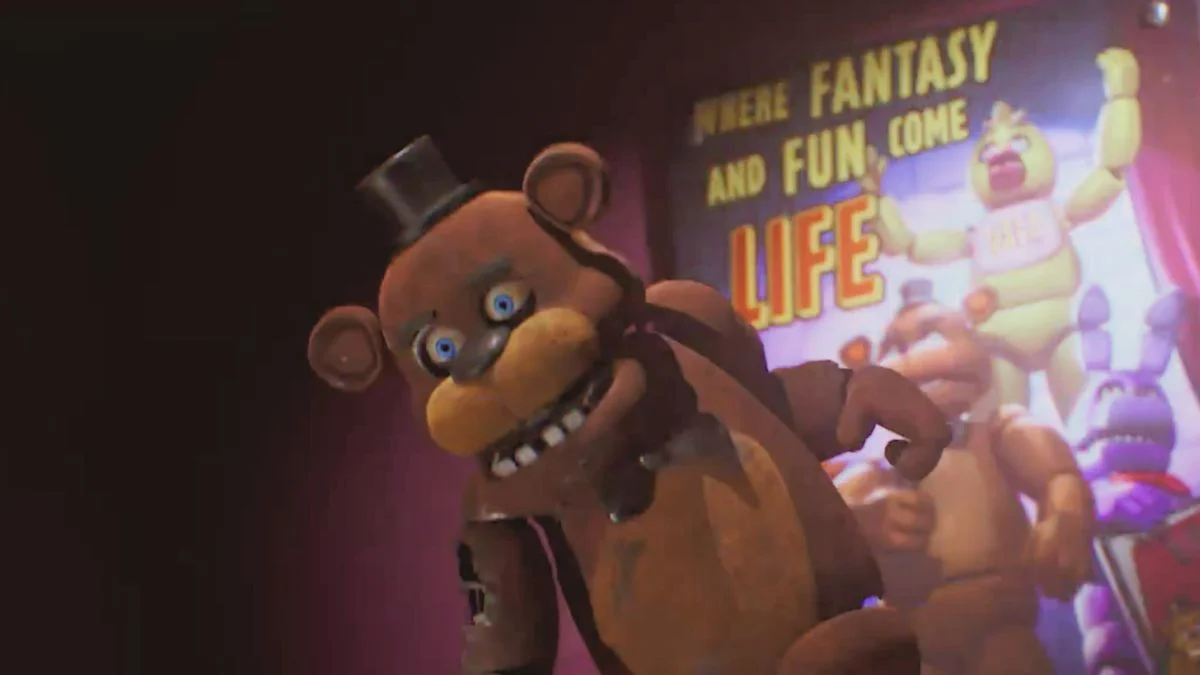

Villains get discussed as story furniture. The scheme, the monologue, the moment the mask comes off. What gets discussed far less is how much mechanical work an antagonist does inside a game. A good villain is a difficulty curve with a face on it, a tutorial that never announces itself, and very often the trigger for the most interesting thirty seconds of play in the whole session.
A villain is a rule you can see
Enemy design carries information. Before a single line of dialogue lands, a player already knows roughly what a boss will do, because the design says it. Size signals damage. Posture signals aggression. A visible weapon signals the shape of the fight to come. Designers lean on this constantly because it saves them from writing instructions nobody reads. That readability is why antagonists end up driving mechanics rather than just framing them. When a game wants to change its own rules for a moment, it rarely does so with a text box. It sends something at you. The screen shifts, the music changes, and the familiar system is suspended in favour of a short, louder version of itself.
Casual games run the same play at a smaller scale, which is why the character on the bonus screen matters more than it looks. Platforms built around short sessions, from puzzle apps to the titles collected on Splash Coins, depend on a recognisable trigger that tells the player the ordinary loop has paused and something with different odds has started. The mischief-maker who shows up when three symbols align is doing the same job as a boss health bar: announcing a rule change in a form nobody needs to be taught.
Researchers have actually measured the bad guy
There is empirical work behind the intuition. A 2021 study in Frontiers in Computer Science, by Reyhan Pradantyo, Max Birk and Scott Bateman, assembled 105 antagonists from well-reviewed games released between 2014 and 2019, then had participants rate each one on five moral dimensions based on appearance alone.
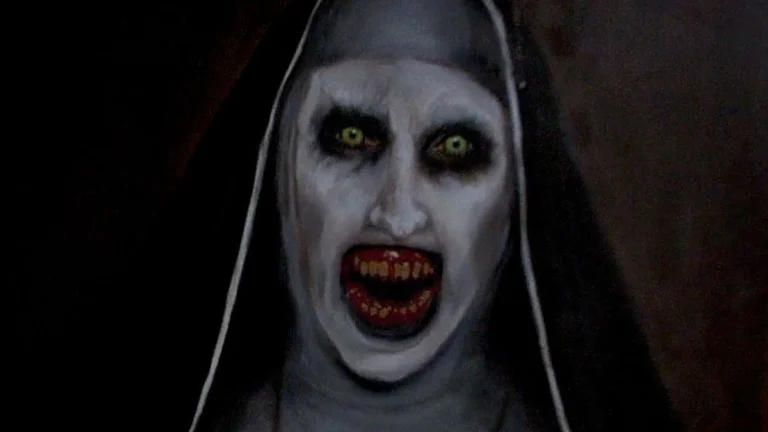
The team then rated those features for prominence and matched them against the morality scores. Four attributes predicted perceived badness better than the rest: the mouth, skin conditions, the character’s stance, and whether they were carrying a weapon. Together with the other visual blocks, the model accounted for roughly two thirds of the variation in how bad a character seemed.
The more interesting finding was the one the authors did not expect. Across the whole set, the antagonists scored only slightly on the immoral side of neutral. Modern game villains do not look evil the way animated film villains do. Designers have quietly moved toward ambiguity, and they let behaviour rather than silhouette do the moral work.
Failure is the mechanic, the villain is the delivery
Antagonists also solve a problem that games have and other media do not. A film can be enjoyed passively. A game needs the player to fail, repeatedly, without quitting. That is a hard thing to engineer, and a well-built enemy is the most reliable way anyone has found to do it.
Work presented at the Cognitive Science Society has looked at how players treat in-game failure during difficult sections, and found that losing tends to be read as part of progress rather than as a verdict. Players who failed more in a game-based learning study showed better learning gains than players who failed less, largely because failure prompted them to compare notes and rethink their approach.
Players who kept playing through repeated losses were not tolerating the game. They were using it. The loss carried information, and the antagonist was the thing that delivered the information in a form the player could act on.
This is also why difficulty spikes attached to a character land better than difficulty spikes attached to a level. Losing to a room feels arbitrary. Losing to someone feels like a problem with a solution, even when the mechanical content of the two failures is identical.
The bonus round inherits all of it
Take everything above and compress it into fifteen seconds and you have the bonus round. A distinct trigger. A different rule set. A short window of altered odds. An exit that returns you to the base game with a number attached.
The craft is in the framing. Video games about magic have used this structure for decades, where a summoned foe or a corrupted spell temporarily rewrites what the player can do, and the fantasy genre gets away with it because the theme already permits sudden rule changes. Grid-based casual titles do it through a character who arrives, misbehaves, and pays out. Sports games do it with a rival who turns one match into a gauntlet.
None of those need a villain in the literary sense. They need an agent. Something that appears to be causing the change, rather than the change simply happening, because a system that alters itself for no visible reason reads as a bug and a system that alters itself because someone showed up reads as a design.
Why the archetypes refuse to die
Designers keep returning to a small set of shapes, and that is not laziness. A hulking obstacle with a tell, a trickster who steals your resources, a rival who mirrors your abilities: each of these maps onto a specific mechanical function. The hulking obstacle teaches pattern recognition. The trickster teaches resource management. The rival teaches the player to evaluate their own build.
Bowser holds Princess Peach so that a rescue has a destination. Dr. Robotnik industrialises the landscape so that the level itself becomes hostile. These are narrative choices, but they are also level design choices, and the two arrived at the same time for the same reason.
The comics parallel is direct. A rogues gallery survives for decades because each member forces the hero to solve a different kind of problem, and the ones who fade are usually the ones who only ever posed the same problem as someone else.
What a good antagonist is really asking of you
The best ones hand the player a question rather than an obstacle. Can you read a pattern under pressure. Will you spend the resource you have been hoarding. Do you understand your own kit well enough to use it when the rules shift. The fight is just the format the question arrives in.
That is the quiet argument for taking villains seriously as design rather than as decoration. Strip out the antagonist and most games still function, but they lose the thing that tells the player when to pay attention, when the stakes changed, and why the last ten minutes mattered. The bonus round, the boss gate and the rival encounter are the same instrument, played at different volumes, and every one of them works because something walked on screen and made the rules interesting again.